
Best free SEO tools in 2026
There are many Best free SEO tools in 2026. If you have a website, blog, YouTube channel, or online business, SEO is the quiet partner that keeps bringing you visitors without paying for ads every single day. In 2026, SEO is not only about blue links on Google. It also helps your brand show up inside AI answers, featured snippets, and different types of rich results. If you want to know what are the Best SEO tools in 2026 to use in SEO.. first of all you have to understand the what actually SEO and.. and how it shows impact in content ranking.
What is SEO ?
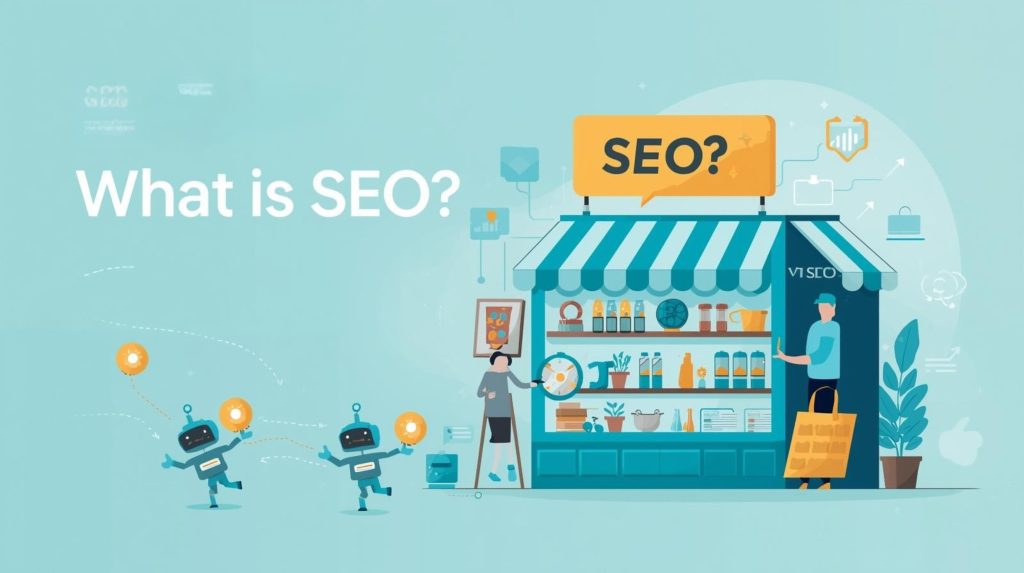
SEO stands for Search Engine Optimization. It is the process of improving your website and content so that search engines like Google and Bing can easily understand it, trust it, and show it to people who are searching for what you offer.
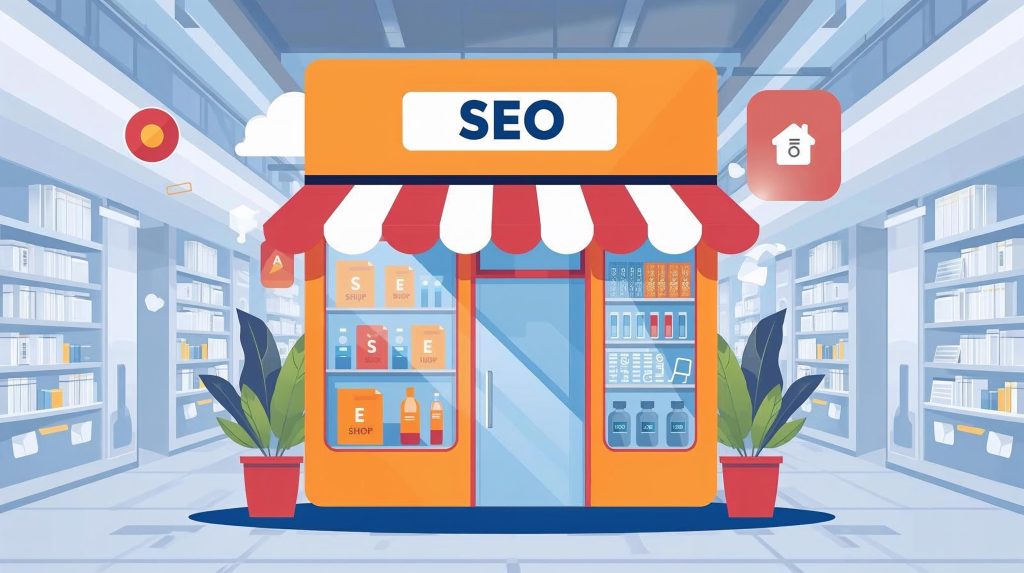
A simple way to imagine SEO is to think about a shop in a crowded market:
- Your signboard (page title) must clearly show what you sell.
- Your shelves (site structure) must be neat and easy to walk through.
- Your products (content) must actually help the customer and solve a problem.
When your shop is clean, clear, and helpful, more people naturally come inside. In the same way, when your website is fast, well‑organized, and full of useful information, search engines feel confident to send visitors to you.
In recent years, Google has put strong focus on E‑E‑A‑T – Experience, Expertise, Authoritativeness, and Trust. It also launched and updated the Helpful Content system which tries to reward pages that are written for humans and give real value, and reduce the visibility of thin, AI‑generated, or copied content that does not help users.
So in 2026, SEO is less about tricks and more about:
- Creating genuinely helpful content.
- Showing your real experience and knowledge.
- Making your site technically smooth and easy to use.
Tools are there to support this process, not replace it.
How SEO works on content ?
Now let us focus on how SEO works on content like blog posts, landing pages, and service pages. When you publish a new article, search engines send crawlers (bots) to scan your page. They check many things
- What is this page about? (title, headings, main keywords, topic)
- Does it match the user’s search intent what the person is really trying to do or learn?
- Is the content original, detailed, and easy to understand?
- Is the page mobile‑friendly and fast?
- Is the structure clear (H1, H2, internal links, schema markup)?
- Do other websites link to your page or domain (backlinks)?
With the Helpful Content system, Google looks very strongly at whether the page actually solves the user’s problem, not just whether it repeats the keyword “best free SEO tools in 2026” many times. Pages that show first‑hand experience, clear steps, and updated information usually perform better in the long term.
For your content, this means:
- Choose one main topic and one main keyword (for example ‘Best free SEO tools in 2026’
- Use that keyword naturally in your title, URL, first paragraph, and at least one H2.
- Use your secondary keywords – free SEO tools, free tools for keyword research, best SEO tools for beginners, free SEO analysis tools, free website SEO tools – naturally where they make sense.
- Answer the main question early, then go deeper with examples and tips.
- Keep paragraphs short and simple; use headings and bullet points.
- Link to your own related articles (internal links) so users can continue reading.
- Update important posts every few months as tools and trends change.
2026 twist: AI, zero‑click, and GEO
In 2026, many searches end without a click because users see answers directly in AI overviews or rich results. These are called ‘zero‑click searches’. To still get value, SEOs now also think about ‘GEO – Generative Engine Optimization‘, which means designing your content so AI systems can easily understand and quote it.
Good GEO practice includes:
- Writing clear, factual sentences that AI can safely reuse.
- Using headings that look like real questions users ask.
- Adding schema markup (FAQ, article, product, review) so search engines get more structured information about your content.
This helps you show up both in normal rankings and in AI‑generated answers.
What are the tools to use in SEO ?
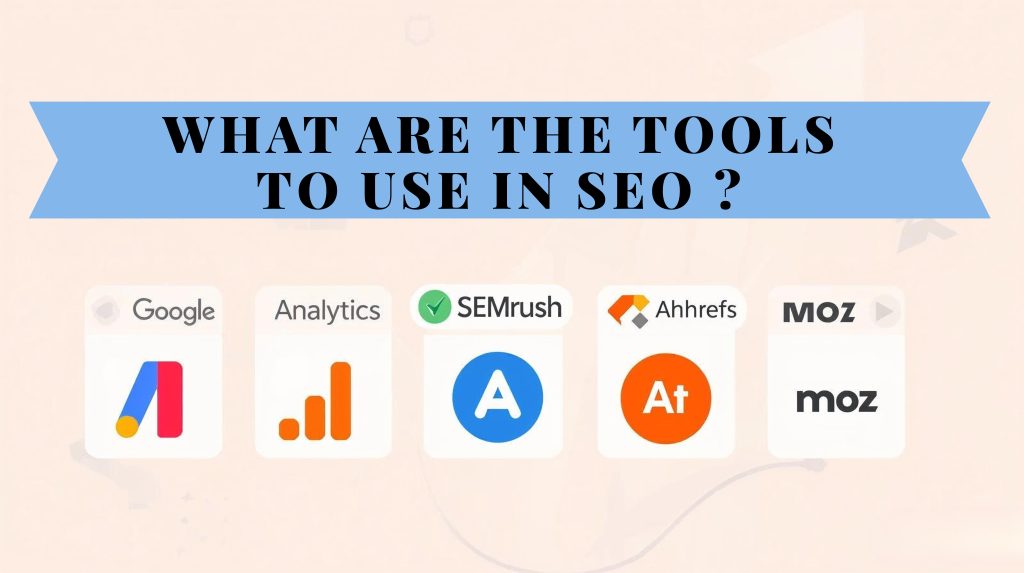
There is no single magic tool that does everything. Real‑world SEOs and digital marketers build a tool stack a small group of tools that work together. If you look at big 2026 tool lists like Backlinko, Marketer Milk, WebAnatomySEO, WsCube Tech, and Why Shy, you will see the same pattern: almost all serious workflows use tools for keyword research, technical audits, content optimization, and rank tracking about Best free SEO tools in 2026.
Let us break the tools into simple categories.
- Keyword research tools
These tools show what people are searching for and help you plan content. They are your main free tools for keyword research.Google Keyword Planner – free inside Google Ads; shows keyword ideas and approximate search volumes.
Semrush Keyword Magic Tool – detailed keyword suggestions, difficulty, and intent, with a limited free plan.
Ahrefs Keywords Explorer – powerful for long‑tail keywords (paid, plus data via Ahrefs Webmaster Tools).
Mangools KWFinder, Ubersuggest – beginner‑friendly tools with freemium models.
AnswerThePublic, AlsoAsked and similar tools – show real questions people ask, perfect for FAQ sections.
Competitor articles on best SEO tools for beginners often recommend starting with Search Console and Keyword Planner, then adding one of these platforms as your skills and budget grow. - Technical SEO and audit tools
Technical tools are like doctors for your site. The classic free SEO analysis tools.
Google Search Console (GSC) – shows index status, Core Web Vitals, mobile usability, and security issues.
Google PageSpeed Insights & Lighthouse – test performance, mobile friendliness, and basic SEO best practices.
Screaming Frog SEO Spider (free for up to 500 URLs) – finds broken links, redirected chains, duplicate titles, and more.
Ahrefs Webmaster Tools – free for verified sites, includes technical site audits and backlink data.
SE Ranking site audit – strong paid crawler with some free tools and trials. - Rank tracking tools
Rank tracking tools show how your keyword positions change over time. Semrush, Ahrefs, SE Ranking, Nightwatch, Morningscore – all offer rank tracking; guides on best free SEO tools in 2026 mention limited free tracking as part of their value. You do not need hundreds of tracked keywords in the beginning. Even watching 10–20 key phrases, including your main terms like “Best free SEO tools in 2026”, is enough to see whether your strategy is working. - Content optimization tools
These tools compare your article with top‑ranking pages and suggest what else to cover.
Surfer SEO – very popular for content briefs and on‑page optimization.
Clearscope, MarketMuse, Frase – help you cover related topics and entities more deeply.
Big 2026 SEO tool reviews often place these in the “advanced” group, recommended once you already publish content regularly and want to squeeze extra performance. Link and competitor research tools. These tools reveal what is working for other sites in your niche.
Ahrefs – powerful backlink index and competitor analysis
Semrush – full‑funnel competitor view (SEO, PPC, social).
Moz, Serpstat, SpyFu – alternatives with different pricing and focus.
Free tools for SEO in 2026
Let’s move to the heart of the topic: a practical set of Best free SEO tools in 2026. Competitor posts often list 20–50 tools, but if you read them closely, a small group of free tools appears again and again.
Core free SEO tools you must know
- Google Search Console
Purpose: Track your organic performance and site health.
Why it’s powerful: Shows queries, clicks, impressions, and technical issues straight from Google.
Many “best free SEO tools” posts call GSC the number one free SEO tool for beginners. this is one of Best free SEO tools in 2026. - Google Analytics 4 (GA4)
Purpose: Understand where users come from and what they do.
Why it’s powerful: Lets you measure how much traffic comes from SEO vs social, ads, or direct, and whether that traffic converts. this is one of Best free SEO tools in 2026. - Google Trends
Purpose: Discover trending topics and seasonality.
Why it’s powerful: Helps you see which topics are rising or falling and compare interest between ideas, which is ideal for planning content. this is one of Best free SEO tools in 2026. - Google Keyword Planner
Purpose: Free tools for keyword research at a country or city level.
Why it’s powerful: Gives keyword suggestions and volume ranges that you can cross‑check with GSC data; widely used in beginner and advanced guides alike. this is one of Best free SEO tools in 2026. - Google PageSpeed Insights & Lighthouse
Purpose: Test speed and user experience.
Why it’s powerful: Core Web Vitals and UX are ranking factors; these tools provide clear, free reports and advice. this is one of Best free SEO tools in 2026.
Extra free SEO analysis tools
- Ahrefs Webmaster Tools (AWT)
Purpose: Website audits and backlink overview for your own domains.
Why it’s powerful: Frequently highlighted as a “must‑use” free website SEO tool, especially for small–mid websites. also a Best free SEO tools in 2026. - Screaming Frog (free tier)
Purpose: Crawl up to 500 URLs and find technical issues.
Why it’s powerful: Many lists rank it among the top free SEO analysis tools of 2025–2026 because it gives you a crawler very similar to what pros use. this is one of Best free SEO tools in 2026. - Yoast SEO / Rank Math (free WordPress plugins)
Purpose: On‑page SEO, XML sitemaps, and basic schema, all from inside WordPress.
Why it’s powerful: Almost every “best SEO tools for beginners” blog recommends at least one of these if you use WordPress. is one of Best free SEO tools in 2026. - Browser extensions (MozBar, SEO Minion, detailed™ etc.)
Purpose: Quick checks on pages and SERPs straight from your browser.
Why they’re powerful: Show page authority metrics, highlight links, and help with SERP previews for free, forming a handy part of your free SEO tools stack. these are widely known as Best free SEO tools in 2026. - SE Ranking & Semrush free tools
Purpose: Let you try premium keyword, site audit, and rank tracking tools with no or low cost.
Why they’re powerful: Several 2026 reviews praise these free plans because they provide genuine data, not just teasers. - Free SEO AI tools (selected)
Purpose: Help with content ideation, audits, and GEO readiness.
Why they’re powerful: New 2026 reviews of free SEO AI tools show that a few well‑chosen tools can simplify tasks like on‑page checks and topic clustering for beginners. this is the one of Best free SEO tools in 2026.
With this stack, you already cover almost everything people expect from “Best free SEO tools in 2026”: keyword research, technical audits, rank tracking (basic), on‑page SEO, and performance analysis.
What tools a digital marketer must have ?
Finally, let’s zoom out. A digital marketer’s job is bigger than SEO alone. You plan content, run campaigns, manage communities, and produce reports. 2026 SEO trend and tool articles agree that successful marketers use a mix of SEO, analytics, creative, and automation tools.
Here is a simple, real‑world stack.
- Search and analytics base
Google Search Console – organic search performance.
Google Analytics 4 – traffic and conversion tracking.
Google Trends – topic and keyword timing.
Looker Studio – build free dashboards that combine GSC and GA4, often recommended in advanced SEO workflows.
- One main SEO platform
When you are ready to pay for a tool, choose one main platform:
Semrush – strong all‑in‑one tool for SEO, PPC, content, and social media.
Ahrefs – best known for backlinks and competitor research.
SE Ranking, Mangools, KeySearch – lighter and cheaper alternatives, praised in 2026 beginner guides.
- Technical and on‑page helpers
Screaming Frog or similar crawler – regular site audits.
PageSpeed Insights and Lighthouse – performance and UX optimization.
Yoast SEO / Rank Math – on‑page SEO and sitemaps in WordPress.
Surfer / Clearscope / Frase – optional on‑page content optimization as your content volume grows.
- AI and content workflow
AI is now a normal part of digital marketing, but Google clearly warns against fully automated, low‑quality content. The smart way is to use AI as an assistant, not a replacement.
Useful tools:
AI writing and research assistants (ChatGPT, Claude, Jasper, etc.) to brainstorm topics, outlines, FAQs, and meta descriptions.
SEO‑focused AI tools that convert complex SEO data into simple to‑do lists, especially for beginners.
Google Docs / Notion / Trello for content planning.
Google Sheets / Airtable for keyword tracking and editorial calendars.
Google Business Profile – must‑have for local discovery if you have a physical location.
Social scheduling tools like Buffer or Hootsuite for consistent posts.
YouTube Studio and basic video editors because more users search directly on YouTube for “how‑to” topics.
Final takeaway
SEO in 2026 is moving fast, but the core remains the same: help real people, show real experience, and keep your website technically healthy. Google’s Helpful Content and E‑E‑A‑T guidelines push websites away from low‑value AI spam and towards genuine, problem‑solving content. The smartest move is to start with a lean stack built around the Best free SEO tools in 2026 – Google Search Console, Google Analytics, Google Trends, Keyword Planner, PageSpeed Insights, one crawler like Screaming Frog, a WordPress SEO plugin, and at least one limited free or trial account on a major suite like Semrush or Ahrefs.
From there, create clear content, use your Best free SEO tools in 2026 to spot problems, rely on free tools for keyword research to plan topics, and slowly add paid tools only when you truly need them. Step by step, this approach can build strong rankings, better visibility in AI answers, and a solid digital marketing foundation.



One Comment